Disbar Michael Hewitt
Michael Hewitt is not a licensed attorney.
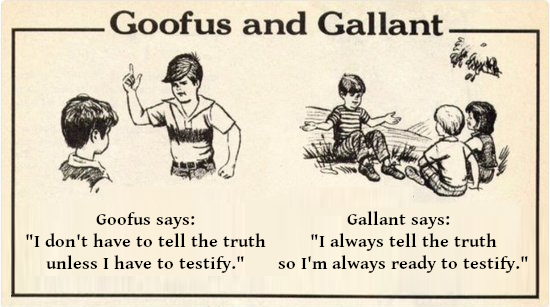
This website documents Michael T. Hewitt's unlicensed practice of law in New York.
The Disbar Michael Hewitt Campaign regrets any shame, humiliation or embarrassment that its activities and this website may cause to licensed attorneys named "Michael Hewitt." We are very sorry.
But because Michael T. Hewitt's unlicensed practice of law has harmed many people, it is imperative to document that unlicensed attorney's crimes until he gets disbarred.
Michael Hewitt is not a licensed attorney.
He attended SUNY Buffalo Law School. He was inducted into the Order of Barristers in 1993.
But Michael Hewitt is not a licensed attorney. He never passed the bar.
The UCS website has the registration status of attorneys licensed to practice in New York. But it does not have a registration for Michael Hewitt.
He never passed the bar.
In 2017, Michael Hewitt was the "Interim Assistant Vice President for Legal Affairs and Labor" at Brooklyn College. He is currently the "University Executive Director of Labor Hearings and Appeals" for the City University of New York. And he is an Esquire Defendant in the case of Wilson v. State of New York, et al., 15-cv-23 (CBA) (MMH).
But Michael Hewitt is not a licensed attorney. He never passed the bar.
Hewitt v. Father Sogliuzzo
On Oct 26, 1997, over 800 parishioners had a contentious meeting with their new pastor at the Church of St. Francis Xavier on West 16th St. in Manhattan.
"I thought it was going to be a dialogue," said Michael T. Hewitt, a lawyer. "There was this expectation there would be answers, but there weren't." (NYTimes, Nov 9, 1997)
Father Louis Sogliuzzo's decision to restore traditional liturgy at Sunday mass discontinued the reflections that a popular nun occasionally offered after homily. Outraged parishioners accused him of authoritarian leadership and demanded his resignation.
"We were getting bombarded with letters and phone calls," said the Rev. Thomas Smith, the assistant to the Rev. Kenneth Gavin, the Provincial in charge of Jesuits in the region. "And the one common thread was, 'Please intervene and help us somehow.'" (NYTimes, Jan 2, 1998)
After one parishioner questioned Father Sogliuzzo's handling of church finances, other parishioners began withholding their donations. After mass, they met at the bottom of the church steps, where they openly discussed their desire for Father Sogliuzzo to leave.
"We want him to go," said Michael T. Hewitt, a leading opponent. "There's no question that that's a must for things to move forward at this church." (NYTimes, Jan 2, 1998)
Father Sogliuzzo resigned a few days later.
$22,000 in the escrow account
Thousands of dollars were withheld each week. Donations had dropped to less than half the budgeted amount.
In recent weeks, collections have been down considerably from the budgeted weekly amount. For example, on Nov. 16, the parish took in $3,700 compared to a budgeted amount of $8,300, according to the parish bulletin. (National Catholic Reporter, Dec 5, 1997).
But the withheld money did not remain in parishioners' wallets. Instead a committee set up an escrow account to collect the donations that would have otherwise gone to the church.
Those opposing the pastor have urged parishioners to temporarily withhold donations to the parish. Mike Hewitt, a lawyer and member of the media committee, said efforts are underway to set up an escrow account. (National Catholic Reporter, Dec 5, 1997).
According to the NYTimes, the "Friends of Xavier Fund" totaled $22,000 at the time of Father Sogliuzzo's resignation. And the article reported that those funds would soon given to the church (NYTimes, Jan 5, 1998).
What the article does not report is how much the fund collected. The article reports the balance of $22,000, but it does not report how much was collected from parishioners.
So we do not know how much went to the church and how much went to administrative fees. But we are certain that the "lawyer" who set up the escrow account would know.
sources:
- "A Liberal Parish, Not-So-Liberal Pastor, Trouble." NYTimes, Nov 9, 1997.
- "Two noted Jesuit parishes under scrutiny." National Catholic Reporter, Dec 5, 1997.
- "Traditions Collide in a Chelsea Parish." NYTimes, Jan 2, 1998.
- "Pastor Resigns From a Divided Chelsea Parish." NYTimes, Jan 5, 1998.
Wilson v. State of New York, et al.
In a case before the Eastern District of New York, Mr. Hewitt is listed on the docket as an esquire defendant. He's not an "esquire," but a lawsuit was filed against him for what he did as an "esquire."
According to the original complaint (ECF 1) in that case, Wilson v. State of New York, et al., 15-cv-23 (CBA) (MMH), Mr. Hewitt did nothing to stop the defamation and harassment of Plaintiff Joe Wilson (pars. 45-47).
Instead, Prof. Wilson's office was raided, his files were confiscated and sent to the New York State Attorney General in an unsuccessful effort to effect a criminal prosecution of Prof. Wilson (par. 61).
After the NYS Attorney General declined to prosecute, Mr. Hewitt testified in disciplinary proceedings that resulted in the termination of Prof. Wilson's employment. Interestingly, when Chancellor's Designee Pamela Silverblatt transmitted the decision to Prof. Wilson and his PSC-CUNY representative (23 Oct 2014), she did not send a copy to the attorneys who represented Brooklyn College. Instead, she sent a copy to "Michael T. Hewitt, Esq." (who is not an "esquire").
As one can read in her decision (ECF 28-3), Mr. Hewitt only provided a few timesheets, but attended a lot of hearings. He was so "concerned that the GCWE could be seen as having tried to circumvent the University's rules limiting payment of overtime" (page 24) that he attended 10 of the 12 hearings (page 2).
That's an extraordinary amount of "concern" for overtime that was paid to a College Office Assistant with an annual salary of $33,036 (page 23, footnote 54).
In fairness, there were other disciplinary charges too. According to the decision, "the College asserted an 'almost staggering' number of violations and improper practices" (page 3). Readers of the decision will find those violations staggeringly difficult to understand. We find it staggeringly difficult to understand why the 12 hearings were staggered over 17 months (page 1).
a "troubling incident"
On March 31, 2022, the Court granted Prof. Wilson's request to subpoena CUNY for 22 boxes of his personal property and for information relating to those 22 boxes (ECF 140).
CUNY seized 22 boxes of Prof. Wilson's property in January 2012. The Court gave Prof. Wilson a subpoena to recover them in April 2022.
That's right. It took 10 years and a court-ordered subpoena for CUNY to return Prof. Wilson's (badly damaged) research collection. And that's what the NYS Attorney General's Office thinks is reasonable.
Attached is the NYSAG's opinion (ECF 157 and ECF 165). After CUNY finally returned the what little remains of Prof. Wilson's African-American history collection, the NYSAG moved for summary judgment on the grounds that the CUNY's search of Prof. Wilson's office "was reasonable at its inception and in its scope."
And in support of the motion, the NYSAG included an affadavit and emails from Michael Hewitt. (ECF 154). According to those documents, there was a "troubling incident" when Michael Hewitt gave Joe Wilson permission to access to his property on May 8, 2014. (Two years after the initial raid).
The sight of Joe Wilson at Brooklyn College appears to have troubled Defendant Paisley Currah. Michael Hewitt's emails do not reveal the nature of the "troubling incident," but we can infer that there was a dispute over how Prof. Currah handled Prof. Wilson's property.
According to Michael Hewitt's email: "Paisley's account is overblown" and "none of this would have been necessary had the chair [Currah] not taken it upon himself, contrary to my counsel, to empty Joe Wilson's office in the first place."
That's a very revealing statement. As everyone who worked at Brooklyn College back then knows, Michael Hewitt was involved in more than one "troubling incident" where a professor's office got emptied.
So which is more likely to be true? That many Brooklyn College employees were carelessly handling the personal property of others, contrary to good counsel of Michael Hewitt? Or is it more likely that the unlicensed attorney Michael Hewitt was giving bad counsel to many Brooklyn College employees?
And if the latter is true, then one also has to wonder what bad counsel the unlicensed attorney Michael Hewitt gave to the other defendants in this case.
references:
- Wilson v. NYS, doc. 1, original complaint, Jan 5, 2015
- Wilson v. NYS, doc. 28.3, Silverblatt opinion, Oct 23, 2014
- Wilson v. NYS, doc. 140, memorandum & order Mar 31, 2022
- Wilson v. NYS, doc. 154, Hewitt declaration Nov 2, 2022
- Wilson v. NYS, doc. 157, defendant memo Nov 2, 2022
- Wilson v. NYS, doc. 159, plaintiff memo Nov 2, 2022
- Wilson v. NYS, doc. 165, defendant reply Nov 2, 2022
Kovach v. CUNY, et al.
In another case, Mr. Hewitt became very concerned by one person's efforts to breathe. According to the complaint in the case of Kovach vs. CUNY, et al., 13-cv-7198 (LGS), Plaintiff Kathleen Kovach suffered respiratory health damage from a Freon leak in her office (pars. 22-24).
Mr. Hewitt refused to accept letters from two physicians about her worsening health condition (pars. 33, 34 & 36). He allowed her supervisor to send a defamatory email about her (par. 36). And ultimately, Mr. Hewitt rejected her request for an accomodation (par. 45).
The accomodation that Ms. Kovach sought was an accomodation that would help her breathe. Her office was causing her to experience allergic reactions, shaking, disorientation and difficulty breathing (par. 22).
Nonetheless, Mr. Hewitt was concerned that the letters from two physicians were "too vague" (par. 33). And Mr. Hewitt took no action to stop her supervisor from smoking in the same office (par. 25).
According to Ms. Kovach's complaint, that's how Mr. Hewitt accomodated a respiratory health condition. He allowed her supervisor to smoke in the same office.
Mr. Hewitt showed more concern for her supervisor's cigarettes than Ms. Kovach's lungs.
references:
- Kovach v. CUNY, doc. 1, complaint, Oct 11, 2013
about & contact
Michael Hewitt is not a licensed attorney. He never passed the bar.
And because Mr. Hewitt's unlawful practice of law adversely affects tens of thousands of CUNY faculty and staff (and by extension their students), we'll keep documenting that Unlicensed Attorney's crimes until he gets disbarred.
If you have any questions, comments or concerns, you may write to Mark U. Fichael-Hewitt at: mark@disbarmichaelhewitt.com or message him at: twitter.com/Mark_UFH.